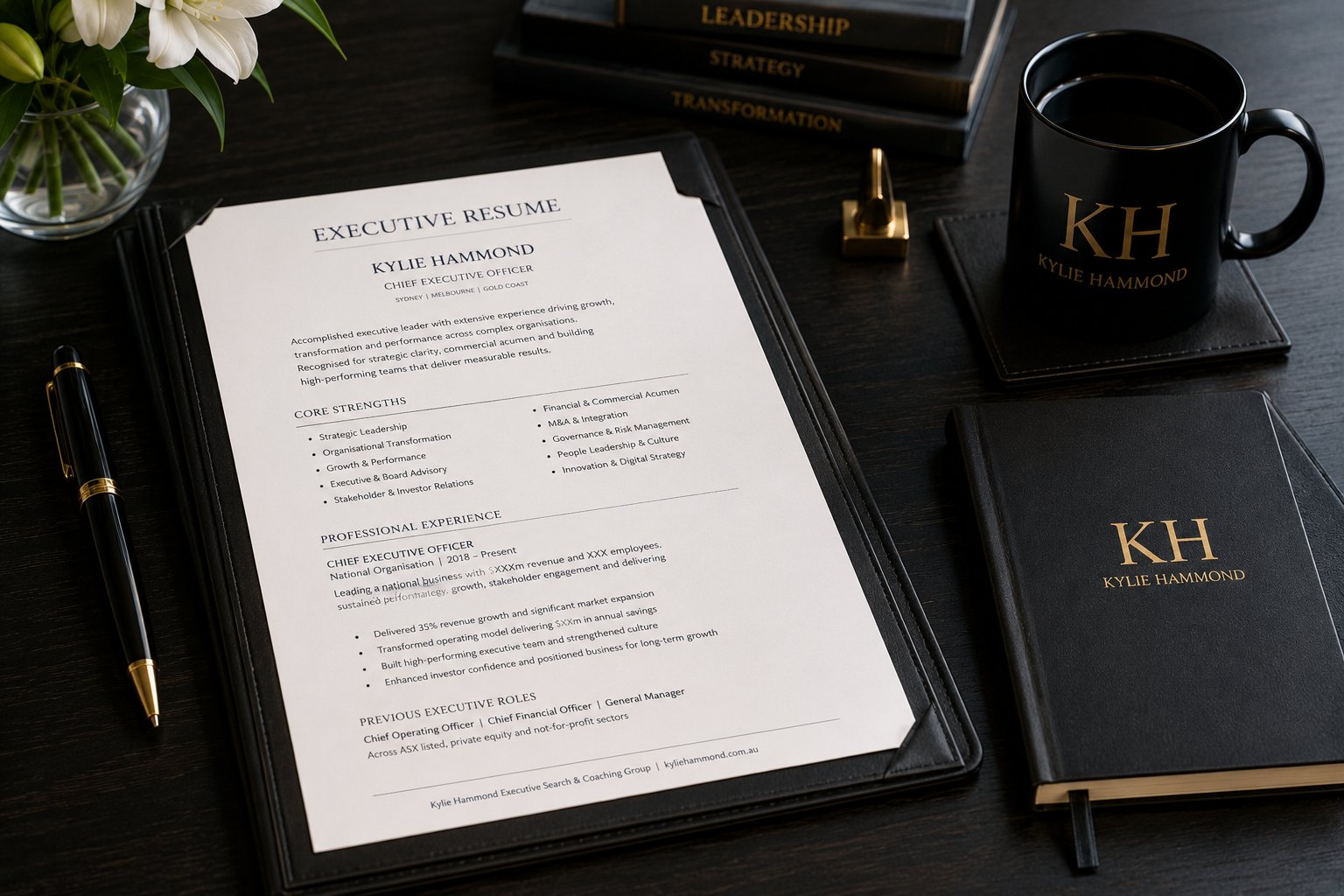
Executive career documentation built for today’s recruitment market — and the opportunities you want next.
Your experience deserves better than a generic résumé.
At executive level, a résumé has a much bigger job to do. It needs to establish your leadership credentials quickly. It needs to communicate scale, complexity, commercial impact and career achievements. It needs to make your value proposition obvious to a recruiter, executive search consultant, CEO, Chair or board.
And before any of those people see it, your documentation may first need to be successfully interpreted by an Applicant Tracking System or other technology used in the recruitment process.
Kylie Hammond’s professional executive résumé writing services are designed specifically for experienced professionals, senior executives, CEOs and board directors who need career documentation that properly reflects the level at which they operate.
We do not simply rewrite your employment history. We position you for what comes next.
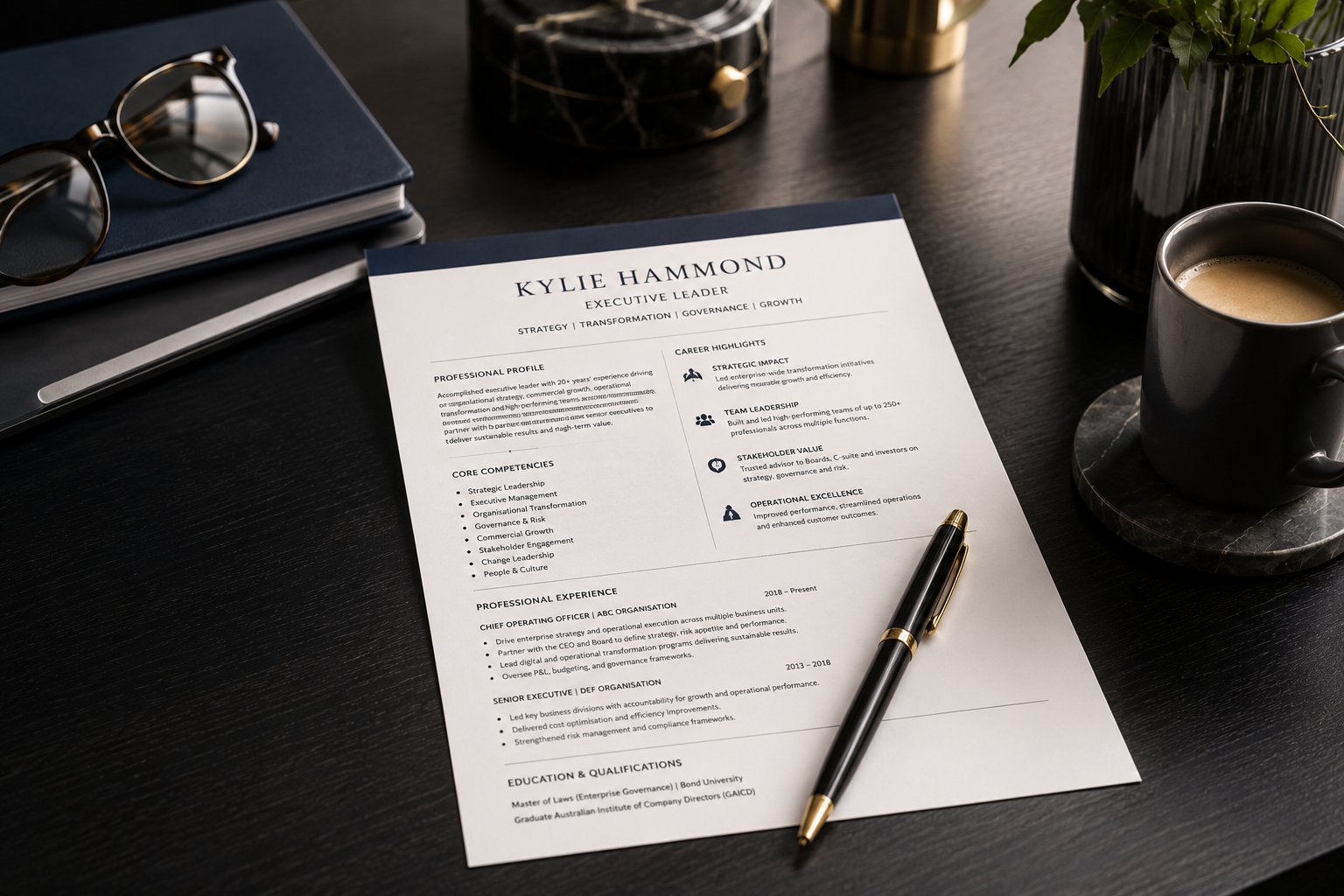
For many advertised positions, a résumé enters an Applicant Tracking System before it reaches a recruiter or hiring manager. These systems can parse career history, skills, job titles, qualifications and keywords. Modern recruitment processes may also incorporate AI-assisted matching and screening.
That makes the architecture and language of the résumé increasingly important. Use conventional headings, machine-readable formatting, relevant role terminology and measurable achievements. We do not claim to beat algorithms or guarantee ATS success. The document still has to work when a person finally reads it.
A strong executive résumé therefore needs to work on two levels:
Clear structure, relevant terminology, appropriate keywords and ATS-compatible formatting.
A compelling executive proposition, evidence of achievement, leadership scope, commercial contribution and a clear reason to meet you.
It is your argument for the next opportunity.
Too many senior résumés document responsibilities rather than demonstrate value. A CEO does not need three pages explaining that they managed a business. A CFO does not need to tell a recruiter that they were responsible for finance.
At senior level, the real questions are different:
Strong executive documentation is part strategic positioning, part writing. It should make visible:
If the proposition is still unclear, start there. See unique value proposition and executive career mentoring.
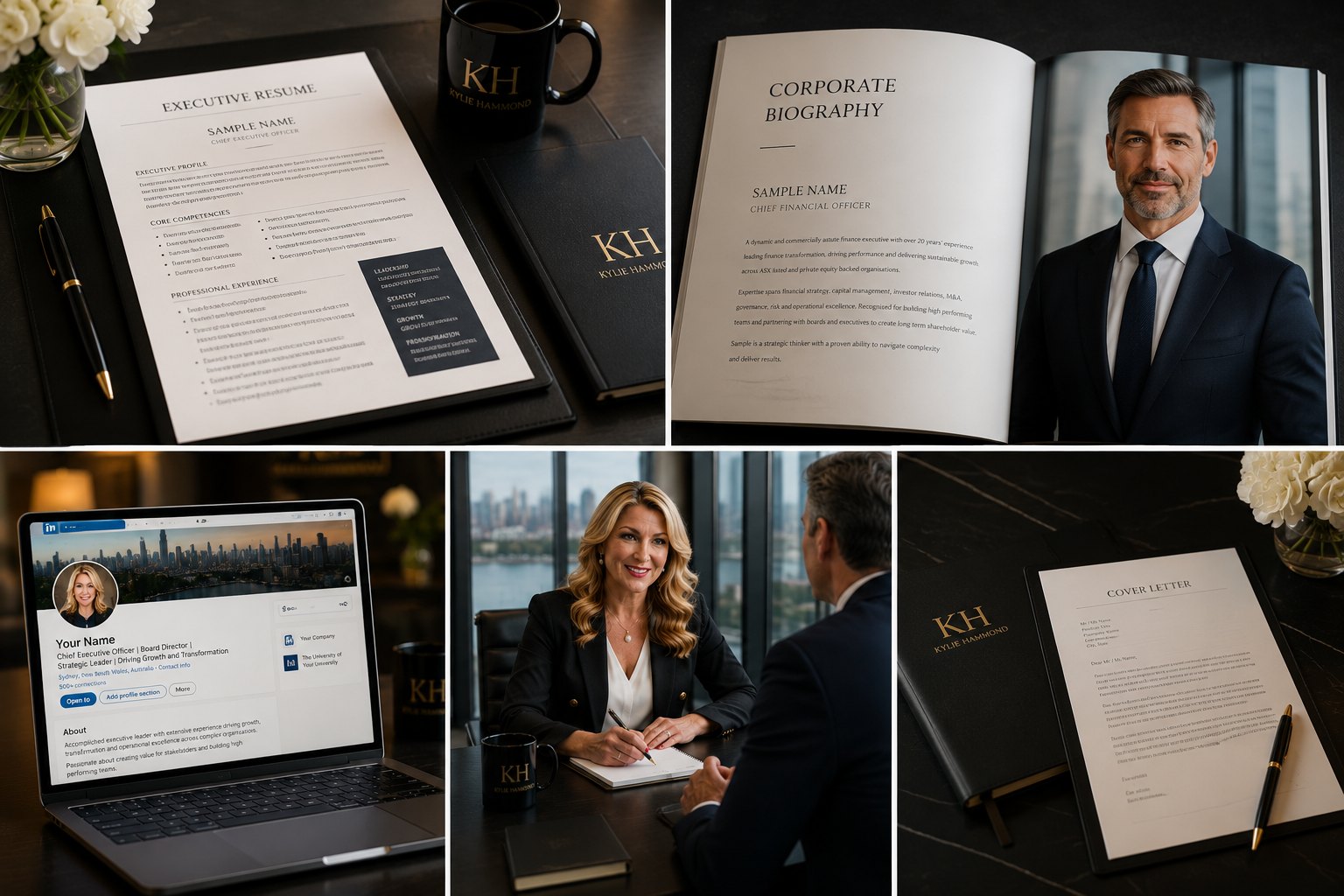
Your career documentation should work as one ecosystem.
Leadership scope, achievements and target-market relevance.
Enterprise leadership, governance, scale, transformation and stakeholder complexity.
Governance, strategy, committee contribution, risk oversight and board relevance.
Board leadership and Chair positioning.
Keyword-rich digital positioning aligned to the résumé.
For board packs, websites, speaking, investor materials and advisory appointments.
Targeted materials for specific opportunities.
Clarify the market proposition before it is translated across all materials.
Explore executive résumé services in the online store
Your résumé and LinkedIn profile should tell the same story.
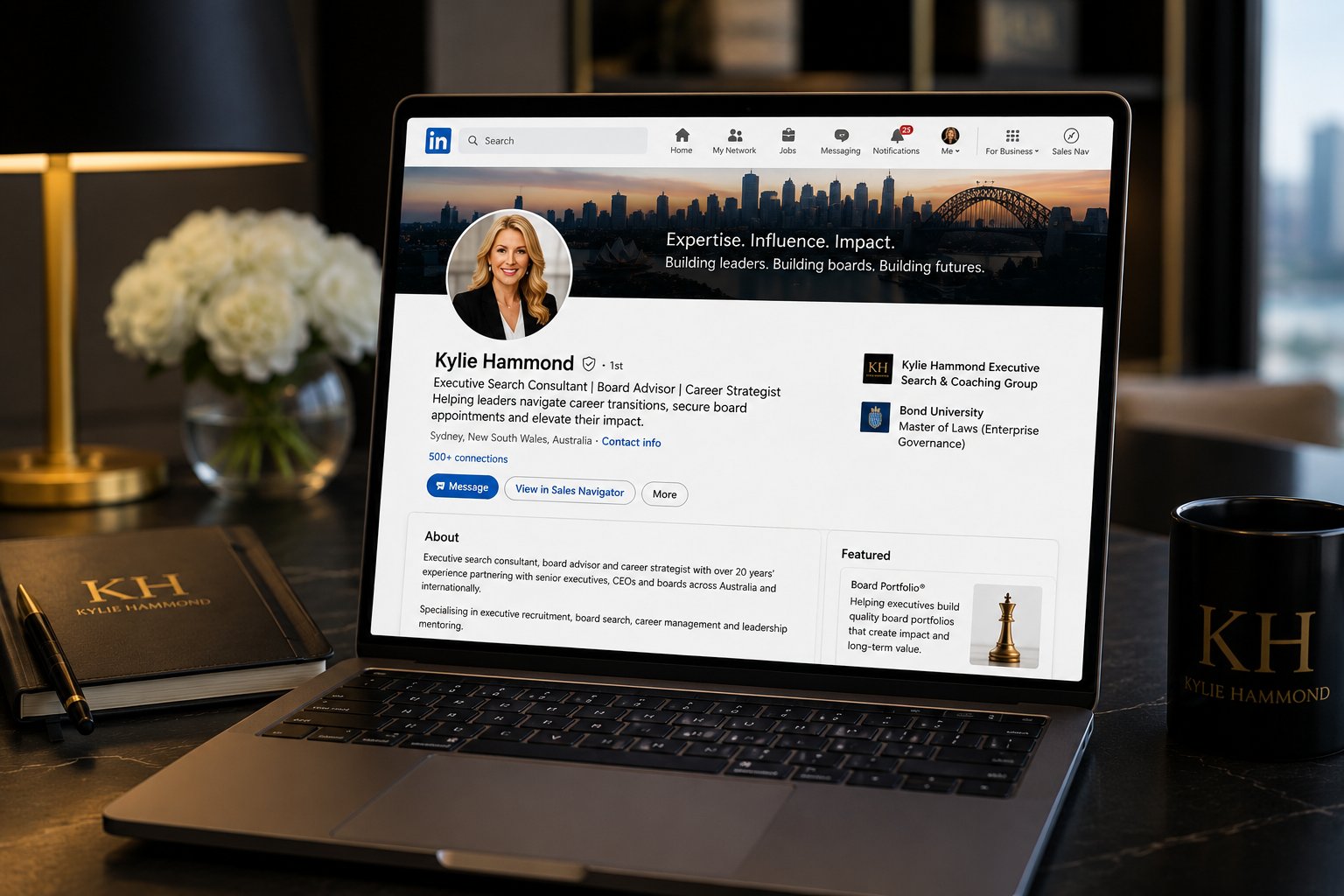
Executive search consultants, recruiters, Chairs, CEOs and prospective employers routinely research candidates online. The LinkedIn profile should reinforce the same executive positioning, not undermine it: headline, About, career history, keywords, achievements, board experience, skills, qualifications, recommendations, a professional photograph, and a profile that is actually possible to contact.
Explore LinkedIn profile makeover services
An executive résumé and a board résumé are not the same document.
For Non-Executive Director opportunities, the emphasis shifts away from day-to-day executive responsibility and towards governance, oversight, strategic judgement, risk, financial acumen, stakeholder management, committee contribution, independence of thought and the value brought to the board collectively.
Board director and CEO-level résumé · Board Portfolio® · Board search · Tiger Boards
Written with an understanding of how senior people are actually hired.

Kylie Hammond has spent more than two decades working at the intersection of executive search, executive careers, leadership positioning and board appointments. A senior résumé should not be written in isolation from the recruitment market.
Documentation informed by how executive search consultants, CEOs and Chairs actually read candidates.
Extensive experience with executives, CEOs and board directors, in Australia and internationally.
ATS-aware writing, LinkedIn and personal branding, delivered one-to-one.
01
Choose the writing package that reflects career stage and objectives.
02
Upload the existing résumé and supporting documents through the secure writing process.
03
Review experience, achievements, target roles and executive value proposition.
04
Write for positioning, language, keywords, ATS compatibility and executive presentation.
05
Refine and prepare the documentation for use across the executive market.

Meet Kylie
Kylie Hammond LLM Ent Gov writes and directs executive documentation with the same market in mind that she searches in: CEOs, C-suite leaders, Chairs and Non-Executive Directors.
The work is confidential and one-to-one. You are not allocated a junior writer after you pay.
Not sure whether your résumé is the problem? Sometimes it is obvious. Sometimes it is not. An executive may have an impressive career and still find that applications are going nowhere.
Submit your current résumé for a confidential assessment. Where useful, include a cover letter or a sample position description. We look at positioning, value proposition, achievements, ATS considerations, structure, seniority of presentation, board positioning where it applies, and alignment with the market you are targeting.
An executive résumé is a positioning document for senior roles. It is not a full career history. It should make your level, scale, commercial impact and next-step relevance obvious to a recruiter, search consultant, CEO or Chair within the first page.
A standard résumé often lists duties. An executive résumé has to show judgement, scale and outcomes: what changed because you were there, the size of the brief, the stakeholders you worked with, and why that is relevant to the next appointment. The language sits at leadership altitude, not task altitude.
Long enough to evidence seniority, short enough to be read. For most senior executives that is two pages; some CEO, board or international briefs run to three. Length is not the goal. Clarity of level, scale and outcomes is the goal. If the third page exists only because nothing was cut, cut it.
ATS-compliant means the file can be parsed by an applicant tracking system: conventional headings, a logical order, readable fonts, no text locked inside images or unusual tables, and terminology that matches how roles are described. It does not mean keyword stuffing, and it does not guarantee that a system will rank you first.
Sometimes. Advertised roles may pass through an ATS or AI-assisted screening before a person reads them. That is why structure and language matter. Search-led and board appointments often still start with a conversation. The résumé still has to work for both paths.
No. A CEO résumé, a functional C-suite résumé and a board résumé are different documents because the reader is assessing different things. The core evidence can be shared. The argument should not be identical.
Yes. Even when a role comes through a relationship, a current résumé is usually required somewhere in the process. It also forces clarity around value proposition, scale and achievements before you walk into the room.
Usually, if you are pursuing Non-Executive Director or Chair work. A board résumé emphasises governance, oversight, judgement, risk, committees and collective contribution, not day-to-day operational command. Adding the word “governance” to an executive CV is not a board résumé.
It should tell the same story. Search consultants and Chairs will look you up. If LinkedIn undersells you, contradicts the résumé, or still reads like a job you left years ago, that is the version many people will believe.
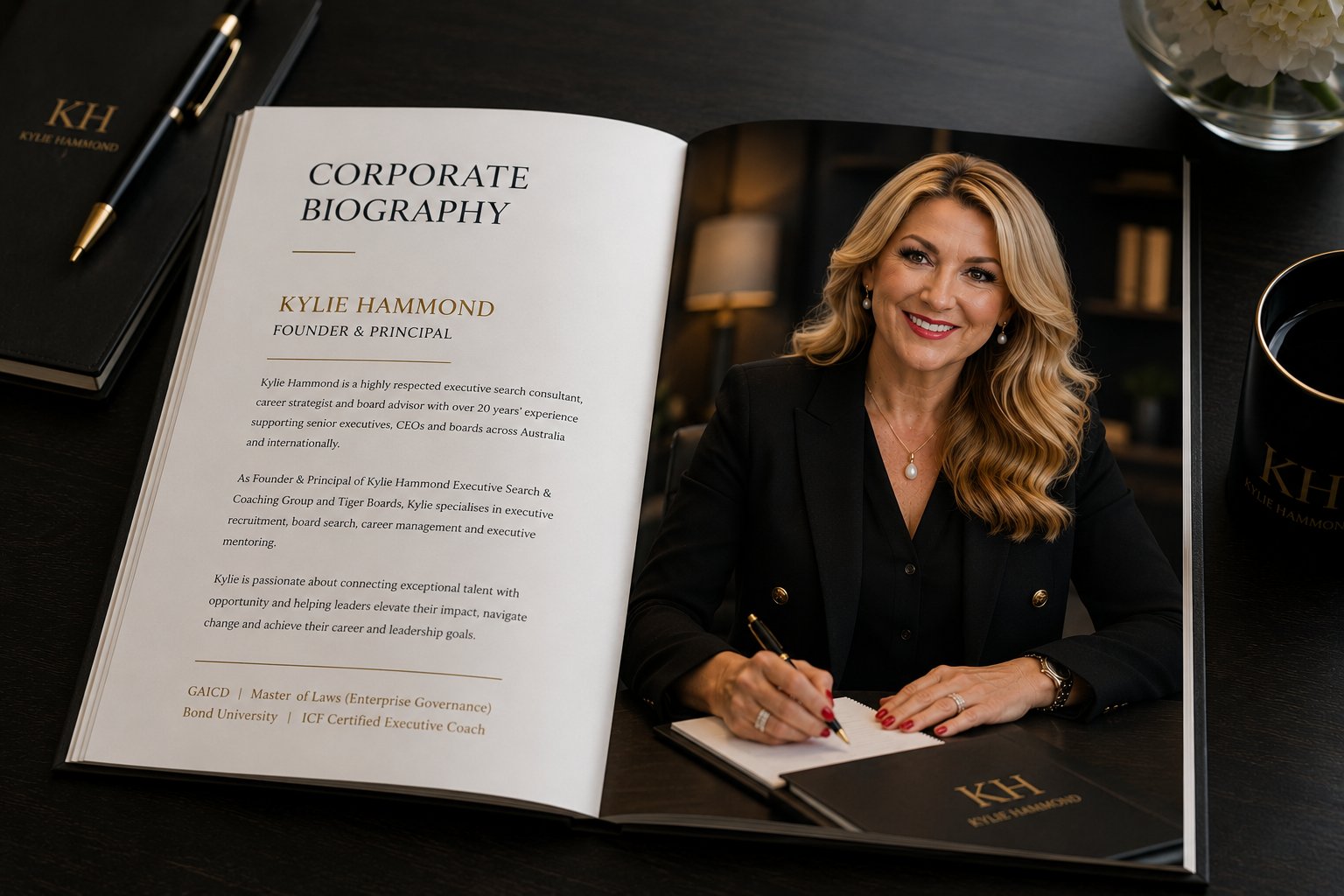
Yes. Executive and corporate biographies are used in board packs, websites, speaking materials, investor documents and advisory appointments. They should match the résumé and LinkedIn, not invent a third version of you.
Yes. That is a common brief, particularly after a long tenure or a redundancy. The work is to translate internal titles and accumulated scope into external market language, then rebuild the document for the roles you want next.
Yes. The résumé has to carry a clean narrative and a forward argument, not a defence of the past. Industry moves need the transferable evidence made obvious. For employer-sponsored exits see executive outplacement.
Yes. The work is delivered nationally and internationally, usually by video. Documentation is written for the market you are targeting.
You have spent years building the career. The résumé, LinkedIn profile and biography should make that value unmistakable.